

The food industry is undergoing one of its most significant restructuring moments in decades. In recent weeks, a series of high-profile M&A moves have shaken the packaged food sector — and they raise a critical question that few are asking out loud: what happens when a giant acquires a portfolio it doesn’t fully know how to formulate?
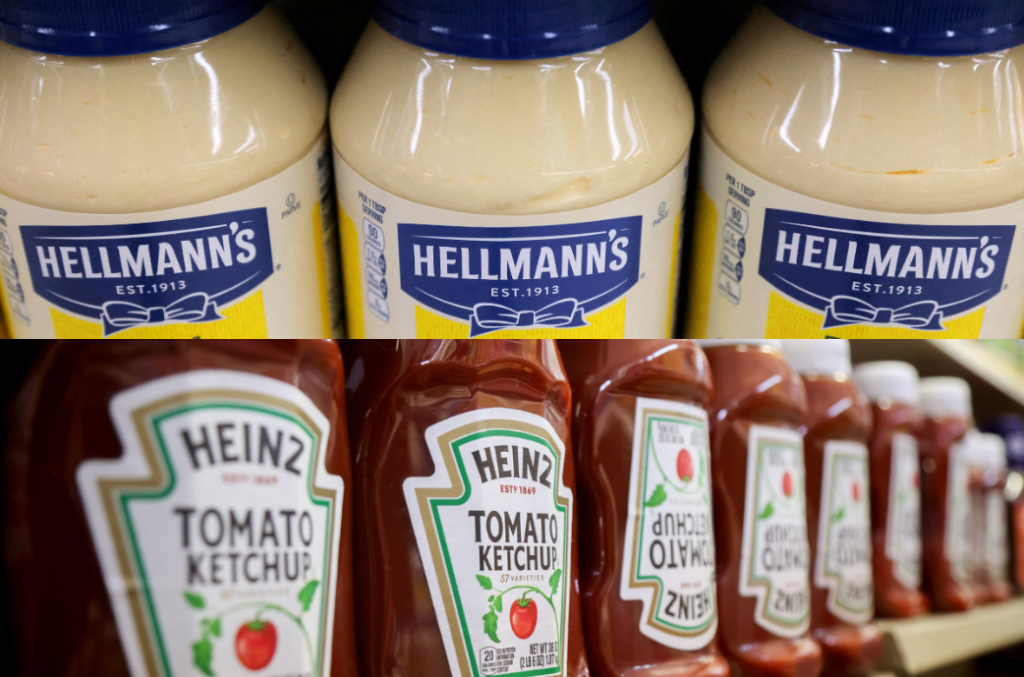
Kraft Heinz and Unilever recently held talks exploring a potential “mega merger” of their food brands — a deal that would have brought Hellmann’s mayonnaise and Heinz ketchup under the same roof. The discussions came as both companies grapple with softer demand for packaged foods amid economic uncertainty. While those talks have since ended, Unilever confirmed it has received an inbound offer for its Foods business and is in discussions with McCormick & Company.
A merger between Unilever’s food business and McCormick would create a food and flavorings giant with billions of dollars in annual sales — combining everything from McCormick’s spices and Frank’s RedHot and French’s Mustard, with Hellmann’s mayonnaise and Knorr sauces and seasonings.
The food business has a potential equity value of as much as €29 billion ($33 billion), according to Bloomberg Intelligence — making this the largest deal in McCormick’s 137-year history.
This is not an isolated event. Unilever CEO Fernando Fernandez has been aggressively executing a “Growth Action Plan” designed to pivot the conglomerate toward high-margin Beauty and Personal Care. Unilever has spent recent years pivoting towards beauty and personal care, reducing focus on food.
When a company like McCormick — historically a spice and seasoning powerhouse — potentially absorbs a portfolio that includes mayonnaise, soups, bouillons, and spreads, it faces a challenge that goes far beyond brand management or commercial strategy: lipid-intensive formulation complexity.
Each food category has a unique fat and lipid architecture. The fats in a mayonnaise behave completely differently from those in a chocolate coating, a processed cheese, or a pet food kibble. Oxidation stability, texture, mouthfeel, emulsification, shelf life — these are not parameters that transfer automatically when a new category enters your portfolio.
This is the hidden tax of consolidation: you acquire the brand, but not always the formulation know-how.
Categories like chocolatería, bakery, confectionery, dairy, cheese, processed meats, and pet food each require a deep understanding of how lipids function — from crystal structure in cocoa butter equivalents, to emulsifier systems in processed cheese, to fat migration in filled chocolates.
This is exactly where Alianza becomes a strategic partner for the new giants being built today.
With over 65 years of experience in lipid solutions and a track record across the Americas, Alianza Team works alongside R&D and procurement teams at multinational companies to develop tailor-made solutions by category. We don’t sell commodity fats — we build category-specific lipid systems designed to solve real technical challenges:
As food portfolios expand through M&A, the formulation challenge grows. Companies need partners who understand not just one category, but the full spectrum of lipid applications across food and adjacent industries.
Alianza is ready to be that partner — wherever the next consolidation wave takes you.