| TL;DR |
|---|
| ° MOSH, or Mineral Oil Saturated Hydrocarbons, and MOAH, or Mineral Oil Aromatic Hydrocarbons, are two groups of mineral oil hydrocarbons that have been addressed by EFSA and monitored by the European Commission in food and food-contact materials. [1][2][3] ° The European Commission has identified mineral oil hydrocarbons as compounds that may enter food through different sources, including lubricants, processing aids, additives, migration from food-contact materials, and environmental contamination. [1] ° In 2023, EFSA updated its risk assessment and concluded that present dietary exposure to MOSH does not raise concern for human health for all age classes, while concerns related to MOAH cannot be excluded, particularly for MOAH with three or more aromatic rings. [4] ° For sensitive categories such as infant nutrition, MOSH/MOAH management remains especially relevant because regulatory expectations, monitoring practices, and consumer trust require careful attention. [1][4][5] ° A structured approach — based on identification of critical points, raw material segregation, good practices, monitoring, and documentation — may help the management of lipid-related MOSH/MOAH risk, depending on the supply chain, formulation, process, and applicable regulatory requirements. [1][5] ° At Alianza, we offer fats and oils developed under high quality standards, designed to support the safety and performance requirements of food formulations, depending on each customer’s application and regulatory context. |
What are MOSH and MOAH?
MOSH and MOAH are two groups of mineral oil hydrocarbons that may be present as contaminants in food, fats, oils, and food-contact materials.
Mineral oil hydrocarbons, or MOH, are a broad family of chemical compounds derived mainly from crude oil, although they may also be produced synthetically from coal, natural gas, and biomass. Within this group, MOSH refers to Mineral Oil Saturated Hydrocarbons and MOAH refers to Mineral Oil Aromatic Hydrocarbons. [1]
Their presence in food may occur through different routes, including lubricants used in machinery, processing aids, food or feed additives, migration from food-contact materials, or environmental contamination. [1]
EFSA first published a scientific opinion on mineral oil hydrocarbons in food in 2012. In 2023, EFSA updated its risk assessment, concluding that current dietary exposure to MOSH does not raise concern for human health for all age classes, while concerns related to MOAH cannot be excluded because some MOAH may be associated with genotoxicity and carcinogenicity. [3][4]
What they are NOT:
- They are not allergens; they are addressed as mineral oil hydrocarbon contaminants in food safety contexts. [1]
- They are not the same as trans fats or saturated fats from nutritional labeling; MOSH and MOAH are categories of mineral oil hydrocarbons. [1]
- They should not be described as an inherent characteristic of all plant-based fats and oils; MOH may enter food through different contamination routes. [1]
- They should not be presented as a single uniform risk category, because MOSH and MOAH have different toxicological considerations. [4]
Context and why it matters
The regulatory backdrop
In 2017, the European Commission issued Recommendation (EU) 2017/84 on the monitoring of mineral oil hydrocarbons in food and in materials and articles intended to come into contact with food. This recommendation called for monitoring with the active involvement of food business operators and manufacturers, processors, and distributors of food-contact materials. [2]
The European Commission also notes that monitoring should consider pre-packaged food, packaging materials, functional barriers, and, where relevant, equipment used for storage and processing. [1]
In 2023, EFSA updated its risk assessment of mineral oil hydrocarbons in food, reinforcing the need to distinguish between MOSH and MOAH when evaluating risk. [4]
Why infant nutrition is a priority category
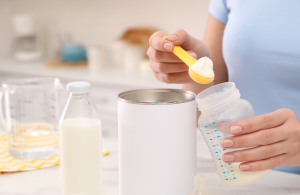
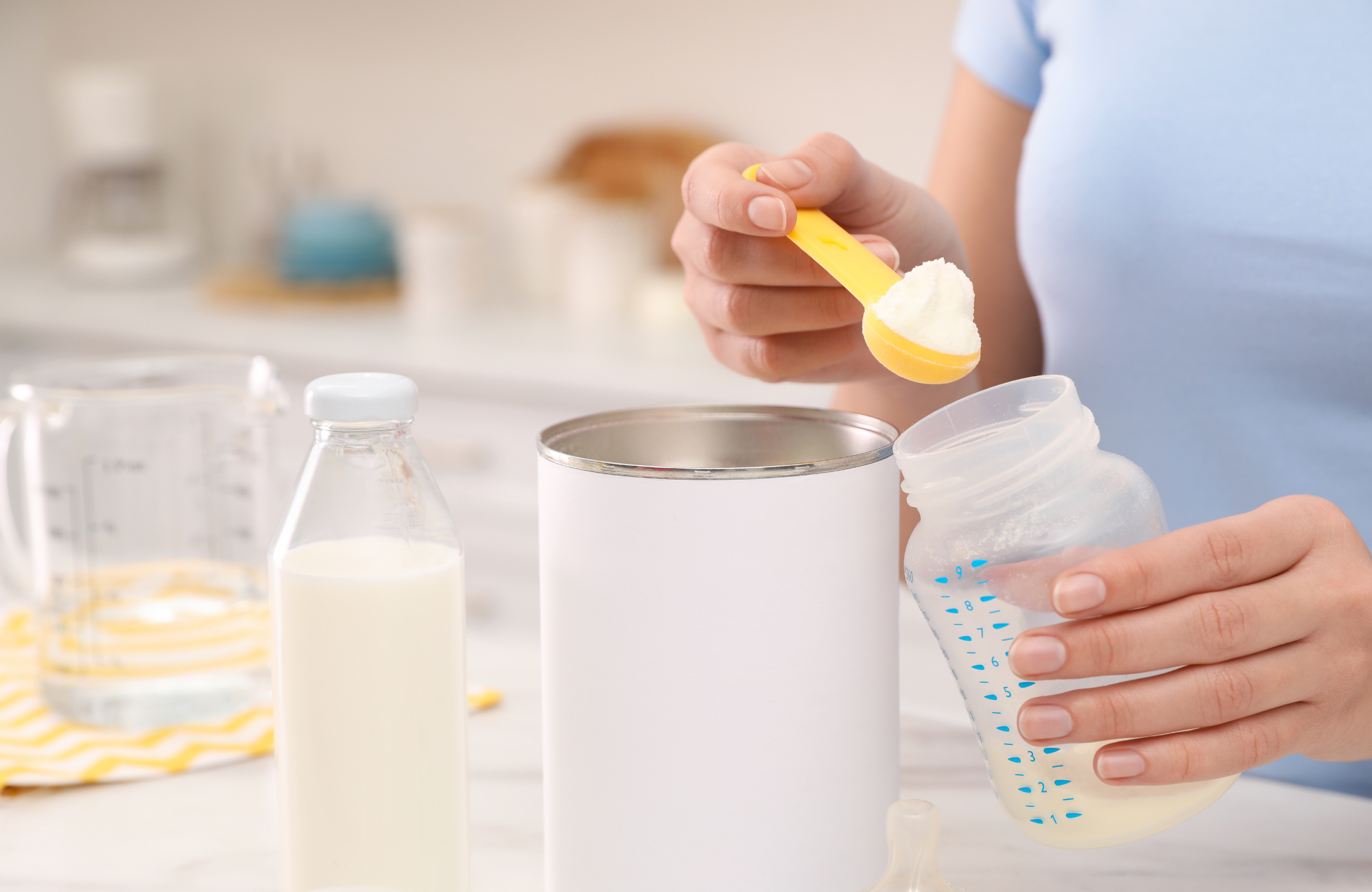
Infant nutrition products are designed for a vulnerable consumer group. The European Commission has specifically discussed MOAH in infant formula and follow-on formula as part of its work on mineral oil hydrocarbons. [1]
For this reason, MOSH/MOAH management in this category may be relevant not only for regulatory alignment, but also for documentation, export processes, internal quality systems, and consumer confidence in the safety of the final product.
Common challenges for manufacturers
- Identifying potential sources of mineral oil contamination across the supply chain, including raw materials, packaging, lubricants, processing aids, transport, storage, and handling. [1][5]
- Reviewing monitoring programs, supplier documentation, packaging materials, storage equipment, and processing equipment where relevant. [1][5]
- Aligning internal quality practices with applicable monitoring guidance, particularly for companies operating in or exporting to European markets. [1][2][5]
When MOSH/MOAH Management may be most relevant
- When formulating products in sensitive categories such as infant nutrition, infant formula, follow-on formula, baby food, medical nutrition, or other foods for vulnerable consumers. [1][4]
- When sourcing fats or oils that may have been exposed to potential mineral oil contamination during transport, storage, handling, processing, or through contact with packaging materials. [1][5]
- When evaluating packaging, functional barriers, food-contact materials, and equipment used for storage and processing as part of a food safety or quality management program. [1]
Framework for managing MOSH and MOAH Risk in fast and oils
A structured approach to managing mineral oil hydrocarbon risk may include three complementary areas, based on potential contamination routes and monitoring guidance. [1][5]
- Identification: Review potential points where mineral oil hydrocarbons may enter the supply chain, including packaging materials, lubricants, processing aids, additives, environmental contamination, storage, handling, and processing. [1][5]
- Handling and control practices: Review raw materials, transport, storage, handling, and processing conditions to help reduce possible contact with mineral oil impurities. [1][5]
- Integrated good practices: Review food-grade lubricants, additives, packaging materials, functional barriers, and equipment used for storage and processing, supported by sampling, analysis, data reporting, and documentation practices where applicable. [1][5]
This framework is designed to help support MOSH/MOAH risk management from the lipid solution. Results may vary depending on the specific raw materials, formulation, production process, analytical method, quality requirements, and regulatory framework applicable to each market. [5]
What Food Manufacturers Can Do: practical guide
Step-by-Step Approach
1. Map your supply chain
Identify potential entry points for mineral oil contamination, including packaging materials, lubricants, processing aids, transport, storage, handling, and environmental contamination. [1][5]
2. Define monitoring criteria
Establish MOSH/MOAH monitoring criteria aligned with applicable monitoring guidance and recognized analytical guidance, such as the JRC guidance for sampling, analysis, and data reporting. [2][5]
3. Select suppliers with traceabilit
Work with fat and oil suppliers capable of providing relevant documentation on raw material origin, handling conditions, quality controls, and, when applicable, testing or verification practices.
4. Implement good manufacturing practices
Review lubricant specifications, packaging compatibility, storage conditions, and process controls for potential mineral oil contact. [1][5]
5. Verify and document
Maintain documentation that may support monitoring, data reporting, internal review, customer requirements, and quality management systems. [5]
Checklist
- ✔️ Supply chain map completed. [1][5]
- ✔️ MOSH/MOAH monitoring criteria reviewed. [2][5]
- ✔️ Fat and oil suppliers reviewed for traceability and quality documentation.
- ✔️ Food-grade lubricants and packaging materials reviewed. [1][5]
- ✔️ Handling, storage, and processing practices evaluated. [1][5]
- ✔️ Documentation available to support monitoring and quality systems. [5]
How Alianza approaches MOSH and MOAH risk management
At Alianza, we work with customers to help manage MOSH and MOAH risk from the lipid solution itself. Through control, monitoring, and mitigation processes, we offer fats and oils developed under high quality standards, designed to support the safety and performance requirements of food formulations.
With more than 75 years of experience in lipids, fats, and oils, Alianza develops tailor-made solutions for different food industry applications. [6]
Our approach is built around the three areas described above: identification, raw material segregation, and integrated good practices.
We understand that adapting production lines to monitor potential sources of cross-contamination can be complex. That is why we work collaboratively with manufacturers to support MOSH/MOAH management as part of their broader food safety and quality programs.
Conclusion: What to Do Now
Managing MOSH and MOAH in infant nutrition formulations should be approached as a technical, regulatory, and quality management issue. It is not only a compliance topic; it may also support consumer confidence, commercial continuity, and product reliability, depending on the formulation, supply chain, process, and market requirements.
If you take three actions from this article:
- Map the potential entry points for mineral oil contamination in your supply chain.
- Establish or review a MOSH/MOAH monitoring program aligned with applicable guidance, such as EU Recommendation 2017/84 and JRC analytical guidance. [2][5]
- Evaluate your fat and oil suppliers’ capacity to provide traceability documentation, handling controls, and quality practices relevant to mineral oil hydrocarbon risk management.
At Alianza, we are available to explore how our lipid solutions and quality practices may support your food safety objectives, depending on your formulation, process conditions, product requirements, and applicable regulatory framework.
Frequently asked questions
- What are MOSH and MOAH?
MOSH, or Mineral Oil Saturated Hydrocarbons, and MOAH, or Mineral Oil Aromatic Hydrocarbons, are groups of mineral oil hydrocarbons that may be present in food, fats, oils, packaging materials, and other food-contact materials. [1][4]
- Why are MOSH and MOAH relevant to infant nutrition?
Infant nutrition targets a vulnerable consumer group. The European Commission has specifically discussed MOAH in infant formula and follow-on formula, and EFSA’s 2023 update identified young populations, including infants via infant formula, as a relevant exposure group for mineral oil hydrocarbons. [1][4]
- Which regulatory bodies have addressed MOSH and MOAH?
The European Food Safety Authority published a scientific opinion in 2012 and an updated risk assessment in 2023. The European Commission issued Recommendation (EU) 2017/84 on monitoring mineral oil hydrocarbons in food and food-contact materials. [2][3][4]
- What are the main potential sources of MOSH and MOAH contamination in food?
Potential sources include lubricants for machinery, processing aids, food or feed additives, migration from food-contact materials, and environmental contamination. [1]
- How can fat and oil suppliers help manage MOSH and MOAH risk?
Suppliers may contribute through traceability, handling controls, careful raw material management, use of food-grade lubricants and additives, verification plans, and documentation related to packaging and processing practices.
- Does managing MOSH and MOAH guarantee regulatory compliance?
No. A structured mitigation and monitoring program may help support regulatory alignment, but compliance depends on the specific product, formulation, production process, market, analytical method, documentation, and applicable regulatory requirements. Manufacturers should consult the regulations and guidance applicable to their markets.
- Is MOSH/MOAH monitoring required in the United States?
Specific U.S. requirements should be reviewed according to the product category and market context. For companies exporting to or operating in European markets, EU Recommendation 2017/84 and related European guidance may be particularly relevant. [1][2][5]
References
- [1] European Commission. (n.d.). Mineral Oil Hydrocarbons (MOH). Catalogue — Food Safety. https://food.ec.europa.eu/food-safety/chemical-safety/contaminants/catalogue_en
- [2] European Commission. (2017). Commission Recommendation (EU) 2017/84 of 16 January 2017 on the monitoring of mineral oil hydrocarbons in food and in materials and articles intended to come into contact with food. Official Journal of the European Union, L 12, 95–96. https://www.boe.es/doue/2017/012/L00095-00096.pdf
- [3] EFSA Panel on Contaminants in the Food Chain. (2012). Scientific opinion on mineral oil hydrocarbons in food. EFSA Journal, 10(6), Article 2704. https://doi.org/10.2903/j.efsa.2012.2704
- [4] EFSA Panel on Contaminants in the Food Chain. (2023). Update of the risk assessment of mineral oil hydrocarbons in food. EFSA Journal, 21(9), Article e08215. https://www.efsa.europa.eu/en/plain-language-summary/update-risk-assessment-mineral-oil-hydrocarbons-moh-food
- [5] Bratinova, S., Robouch, P., & Hoekstra, E. (2023). Guidance on sampling, analysis and data reporting for the monitoring of mineral oil hydrocarbons in food and food contact materials — 2nd edition. Publications Office of the European Union. https://publications.jrc.ec.europa.eu/repository/handle/JRC133174
- [6] Alianza Team USA. (n.d.). Alianza USA. https://alianzateam.us/