| TL;DR |
|---|
| ° Reducing saturated fat in cookies is more than a simple ingredient swap — it can be a structural formulation challenge that may affect texture, volume, mouthfeel, and sensory experience. [1][2] ° Scientific literature describes fats as important ingredients in baked goods and biscuit systems because they contribute to shortening, texture, mouthfeel, dough behavior, and final product structure. [1][2] ° The Dietary Guidelines for Americans, 2025–2030 state that, in general, saturated fat consumption should not exceed 10% of total daily calories. [4] ° Because cookie matrices can vary substantially across formats, reformulation generally requires product-specific evaluation rather than a standardized solution. [1][2] ° At Alianza, we develop customized lipid-based solutions designed to help manufacturers work toward nutritional, functional, and sensory objectives, depending on the formulation, process conditions, and applicable regulatory requirements. |
What is saturated fat reduction in cookies?
Saturated fat reduction in cookie formulations can be understood as a structural reformulation challenge: reducing or replacing traditional solid fats while aiming to support the sensory and textural attributes consumers expect.
In cookies and baked goods, fats are not only a source of calories. Scientific literature describes fat as an important ingredient in baked products, where it contributes to desirable textural properties, shortening, richness, flavor, mouthfeel, dough behavior, and final biscuit structure. [1][2]
When traditional solid fats are reduced or replaced, the food matrix may change in ways that go beyond nutrition. Depending on the formulation and process, changes may occur in texture, mouthfeel, appearance, aeration, hardness, fracture strength, and sensory performance. [1][2]
What this challenge is NOT:
- It is not only a regulatory or nutrition label issue — it can also involve product performance, sensory quality, and formulation behavior.
- It is not typically addressed through a single universal ingredient or standardized reformulation formula.
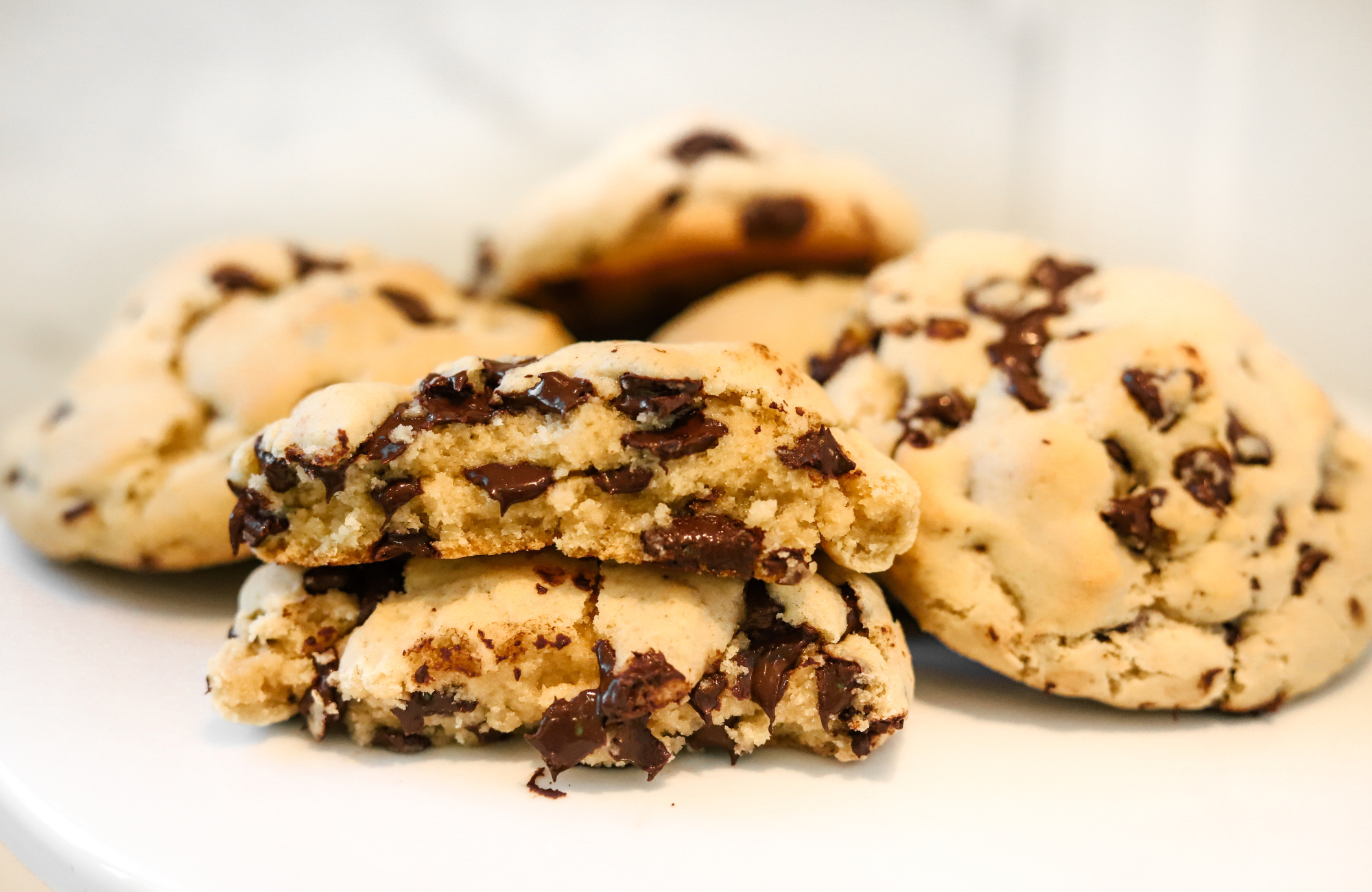
- It should not be assumed to behave the same across all cookie formats: a chocolate chip cookie, a sandwich cookie, and a wafer may each require different formulation evaluation.
Why reducing saturated fat in Cookies is structurally complex
The regulatory and market backdrop:
The Dietary Guidelines for Americans, 2025–2030 state that, in general, saturated fat consumption should not exceed 10% of total daily calories. [4] For food manufacturers, this type of guidance may be considered when defining nutrition-related product objectives. Product category, market context, claim strategy, serving size, formulation, process conditions, and applicable regulatory requirements should also be evaluated case by case.
At the same time, when a reformulation introduces or changes ingredients, allergen labeling requirements should also be reviewed. In the United States, the FDA identifies nine major food allergens and requires that food labels identify the food source of all major food allergens used to make the food. [5]
Why the bakery and cookie industry faces this challenge acutely:
Cookies and biscuit-style products often rely on fats for key structural and sensory attributes. Studies on biscuit systems have shown that fat type and fat replacement strategies can influence dough properties, hardness, fracture strength, microstructure, and sensory characteristics. [1][2]
Additional research has also evaluated the role of different fat systems in hard dough biscuit formulations. [3]
For cookie brands, this means reformulation efforts should be evaluated carefully. A change designed to support nutritional objectives may also affect the eating experience, depending on the specific food matrix and production process.
Common formulation risks when addressing this challenge:
- Applying alternative fat systems without evaluating their effect on the specific food matrix.
- Prioritizing a nutritional target without assessing potential impacts on texture, lubrication, mouthfeel, volume, and sensory performance.
- Treating different cookie formats as if they shared the same formulation dynamics.
When this challenge may be most critical:
- When reformulating a product that relies on solid fats for characteristic texture, such as short dough cookies, cream-filled cookies, or layered wafers.
- When a brand is exploring changes to its nutritional profile while aiming to maintain the expected sensory experience.
- When the formulation team needs technical support to evaluate lipid-based alternatives before investing in production trials.
Three dimensions of cookie fat reformulation
A technically grounded approach to saturated fat reduction in cookies may address three interconnected dimensions:
- Nutritional objective: Define the target reduction level based on applicable dietary guidance. Brand objectives, market requirements, serving size, claim strategy, full formula, process conditions, and applicable regulatory requirements should also be evaluated case by case. [4]
- Sensory performance: Evaluate which textural and sensory attributes are most important for the product, such as shortness, lubrication, mouthfeel, volume, aeration, or bite, and assess how the lipid solution may support those attributes. [1][2]
- Food matrix compatibility: Assess how the reformulation interacts with the specific combination of flour, sugar, lipids, moisture, processing conditions, and product format, because each matrix may behave differently. [1][2]
- This framework is designed to help manufacturers approach reformulation with technical precision. Final results depend on the specific formulation, production process, quality targets, and applicable regulatory requirements for each market.
How to reduce saturated fat in cookies: Step-by-Step guide
Step 1: Define the nutritional target
Establish the desired saturated fat reduction objective, when applicable, in alignment with relevant guidance such as the Dietary Guidelines for Americans, 2025–2030, and the product’s regulatory and commercial context. [4]
Step 2: Map the food matrix
Identify the specific textural and sensory attributes that solid fats currently support in the product, such as shortness, lubrication, volume, mouthfeel, and flavor release. [1][2]
Step 3: Evaluate alternative lipid solutions
Work with suppliers capable of providing lipid-based alternatives and technical support tailored to the specific product matrix, rather than assuming that a generic replacement will perform the same across formats.
Step 4: Run targeted trials
Test the reformulated solution at small scale before moving into broader production trials, focusing on nutritional objectives, sensory performance, and matrix compatibility.
Step 5: Review label and allergen implications
Ensure any new ingredient or lipid solution aligns with the brand’s label objectives and applicable allergen labeling requirements. In the U.S., FDA requirements for major food allergen labeling should be considered when relevant. [5]
Checklist
- ✔️ Nutritional target defined and aligned with applicable dietary guidance
- ✔️ Food matrix mapped with key textural and sensory attributes identified
- ✔️ Alternative lipid solutions evaluated for the specific product format
- ✔️ Small-scale trials completed before broader production investment
- ✔️ Label and allergen implications reviewed according to applicable requirements
How Alianza supports cookie fat reformulation
At Alianza, we understand the context and the challenges bakery and cookie manufacturers are navigating. We do not present reformulation as a universal fix or a one-step process. We develop lipid-based solutions tailored to each product challenge.
Through our experience in the development of customized lipid solutions, we work with manufacturers to:
- Support reformulation processes aimed at improving the nutritional profile, including saturated fat reduction when applicable, while recognizing that final results depend on the full formula, process conditions, serving size, claim strategy, and applicable regulatory requirements.
- Support label strategy by offering lipid solutions that may align with each brand’s objectives and the specific requirements of the final product.
- Support key sensory attributes by working on aspects such as lubrication, texture, mouthfeel, and shortness, especially in reformulations where reducing or replacing solid fats may affect product performance.
Reformulation should not be treated only as a barrier. It can be approached as an opportunity to rethink the product with technical precision. At Alianza, we start from the needs of each application to develop lipid solutions designed to help balance nutritional objectives, sensory performance, and product requirements.
Conclusion: What to do n6ow
Saturated fat reduction in cookies can be approached as a technical formulation challenge, not only as a nutrition label change. The goal is to evaluate how reformulation may support nutritional objectives while considering texture, sensory performance, and product requirements.
If you take three actions from this article:
- Map the specific textural and sensory attributes that solid fats currently support in your product before evaluating any replacement.
- Avoid assuming that a generic fat substitute will perform the same across different cookie formats; seek product-specific formulation evaluation.
- Engage a technical supplier or formulation team with experience in lipid science for bakery applications to help evaluate reformulation options.
At Alianza, we are available to explore how our customized lipid solutions and technical support may help support your reformulation objectives, depending on your formula, process conditions, product requirements, and applicable regulatory framework.
Frequently asked questions about
Why is reducing saturated fat in cookies structurally complex?
Traditional solid fats can perform structural and sensory roles in cookies and biscuit-style products. Scientific literature describes fats as contributing to dough behavior, texture, shortening, mouthfeel, and final product structure. When those fats are reduced or replaced, product attributes such as hardness, fracture strength, microstructure, and sensory performance may be affected, depending on the formulation and process. [1][2]
What is “shortness” in cookies and why does it matter?
Shortness refers to the crumbly, tender bite commonly associated with certain cookie and biscuit formats. It is influenced by formulation variables, including the type and amount of fat used. When solid fats are reduced or replaced, this attribute may need to be evaluated as part of the reformulation process. [1][2]
What dietary guidance addresses saturated fat?
The Dietary Guidelines for Americans, 2025–2030 state that, in general, saturated fat consumption should not exceed 10% of total daily calories. [4]
Is there a universal saturated fat replacement for cookies?
A universal replacement should not be assumed. Because cookie matrices can vary across formats, such as chocolate chip cookies, sandwich cookies, and wafers, reformulation generally requires product-specific evaluation.
What sensory attributes may be affected by saturated fat reduction?
Depending on the formula and process, affected attributes may include softness, lubrication, mouthfeel, volume, aeration, hardness, fracture strength, surface appearance, and the characteristic bite of the product. [1][2]
How do allergen labeling requirements relate to reformulation?
When introducing or changing ingredients, manufacturers should review whether the new formulation affects allergen labeling obligations. In the United States, the FDA identifies nine major food allergens and requires labels to identify the food source of all major food allergens used to make the food. [5]
What should cookie manufacturers look for in a lipid solutions supplier?
Manufacturers may benefit from evaluating suppliers based on their ability to provide product-specific technical support, documentation, traceability, and experience with different bakery applications. This should be assessed according to the manufacturer’s formulation objectives, quality standards, and applicable regulatory requirements.
References
- [1] Kampa, J., Bull, S. P., Signorello, A., Frazier, R. A., & Rodriguez-Garcia, J. (2023). Saturated fat replacement in short dough biscuits with HPMC and lecithin stabilised nanoemulsions. npj Science of Food, 7, Article 26. https://doi.org/10.1038/s41538-023-00202-5
- [2] Mamat, H., & Hill, S. E. (2014). Effect of fat types on the structural and textural properties of dough and semi-sweet biscuit. Journal of Food Science and Technology, 51(9), 1998–2005. https://doi.org/10.1007/s13197-012-0708-x
- [3] Kouhsari, F., Saberi, F., Kowalczewski, P. Ł., Lorenzo, J. M., & Kieliszek, M. (2022). Effect of the various fats on the structural characteristics of the hard dough biscuit. LWT, 159, Article 113227. https://doi.org/10.1016/j.lwt.2022.113227
- [4] U.S. Department of Agriculture & U.S. Department of Health and Human Services. (n.d.). Dietary Guidelines for Americans, 2025–2030. https://cdn.realfood.gov/DGA.pdf
- [5] U.S. Food and Drug Administration. (2026, March 11). Food allergies. https://www.fda.gov/food/nutrition-food-labeling-and-critical-foods/food-allergies